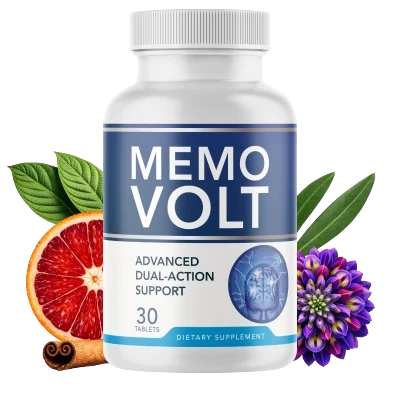
Reported ingredients and research context
A September 2026 secondary review describes a 458 mg proprietary blend. Verify this total and the exact formulation against the current Supplement Facts label: manufacturers may update labels. The individual quantities of the ten ingredients are not disclosed in that review.
| Reported ingredient | What can responsibly be said |
|---|---|
| Xylitol | Sweetener/carrier; not established as a cognitive treatment. |
| Ceylon cinnamon bark | Studied mainly for metabolic outcomes, not proven to improve memory in this formula. |
| Banaba leaf / corosolic acid | Investigated for blood-glucose-related effects; discuss diabetes medicines with a clinician. |
| Saffron extract | Some independent human studies concern cognition or mood; the product dose is not individually disclosed. |
| Fucoxanthin | Marine pigment studied in metabolic and laboratory settings; no verified MemoVolt outcome. |
| Fucoidan | Seaweed polysaccharide studied in various settings; potential interactions require caution. |
| Moro blood orange / citrus extract | Often researched for body composition, not MemoVolt-specific cognitive outcomes. |
| Kudzu flower extract | Evidence from other plant parts should not be assumed to apply to flower extract. |
| Olive leaf / oleuropein | Research often focuses on vascular/metabolic endpoints rather than MemoVolt memory outcomes. |
| Berberine HCl | Investigated for glucose and lipid metabolism; possible medication interactions. |
Why individual doses matter
Clinical research evaluates specific ingredient preparations, populations and doses. A proprietary blend total cannot tell a buyer how much saffron, berberine or any other individual ingredient is in one serving. No ingredient study should be represented as a trial of MemoVolt.
Questions to ask before purchasing
- Can the seller supply the current Supplement Facts label?
- Can the seller disclose individual ingredient amounts and standardization?
- Are there allergen warnings or interaction precautions?
- Are any independent finished-product trials or third-party test reports available?
Ingredient evidence is not finished-product evidence
| Evidence tier | What it can tell you | What it cannot establish |
|---|---|---|
| Published trial of the exact finished product | Direct evidence under the studied conditions | Effectiveness in everyone or for unstudied conditions |
| Human study of one ingredient | Possible effect at the tested dose and formulation | That an undisclosed amount in MemoVolt produces the same effect |
| Animal or laboratory experiment | A hypothesis or biological mechanism | A clinical benefit in humans |
| Seller explanation or testimonial | What is being claimed or reported | An independently verified treatment effect |
Label transparency checklist
- Serving size and recommended number of tablets
- Exact milligrams of each ingredient or proprietary-blend total
- Botanical species, plant part, extract ratio and standardization
- Allergens, excipients and country of manufacture
- Warnings for pregnancy, medications and chronic conditions
Sources and verification notes
Seller descriptions are not clinical evidence. Package details may change; check the live seller checkout and written return terms before purchasing.
- U.S. FDA — Dietary Supplements (regulatory background)
- NIH Office of Dietary Supplements — What You Need to Know (supplement basics)
- MemoVolt label and marketing review, September 2026 (secondary account; confirm against the product label)